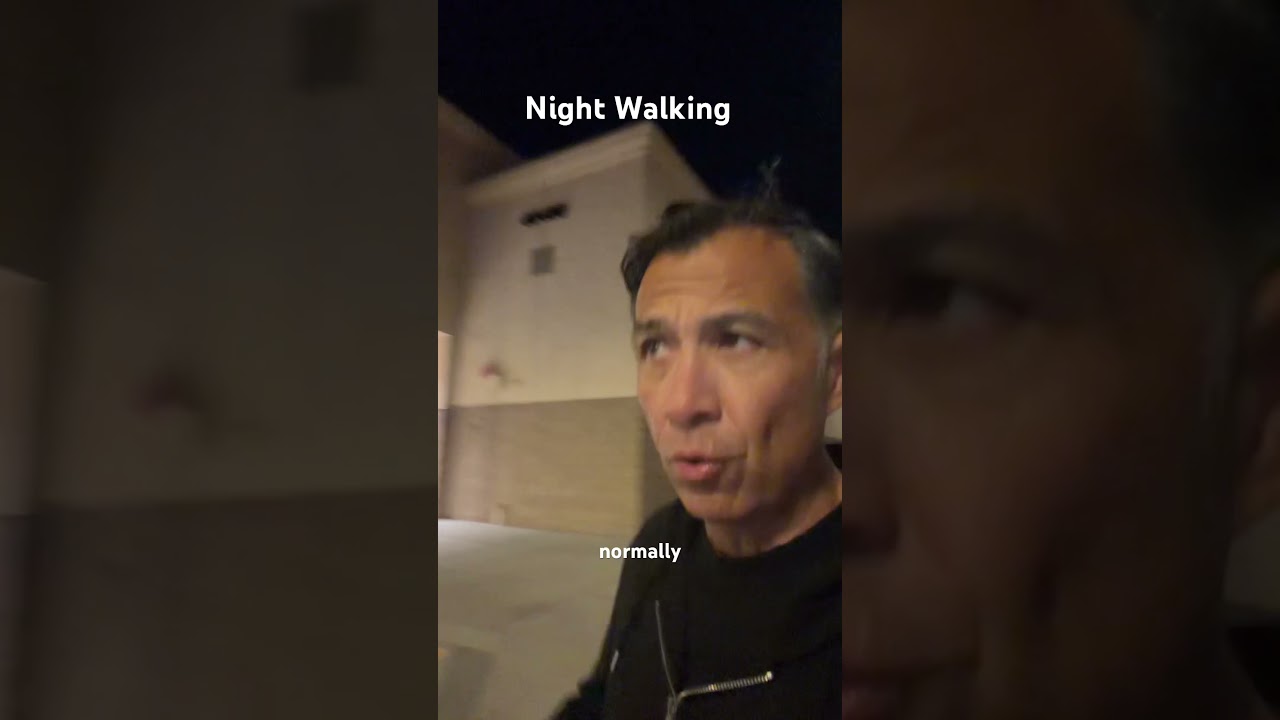
How to Keep Rucking While Traveling: A Night Walking Guide for Road Warriors
▶ Watch on YouTube: Travel Night Walking Tips
The excuses are always at their finest when you're away from home. New city, jet lag, packed schedule, unfamiliar terrain, hotel bed that's either too soft or too firm, and the calendar full of people who need things from you. I know this list because I've written every item on it, mentally, standing at a hotel room window wondering whether tonight counted as a rest day.
Here's what I've learned across 500-plus consecutive training days, many of them on the road: travel is not a reason to stop. Travel is a test of your system. And if your system only functions under perfect conditions - your neighborhood, your gear room, your usual route, your set schedule - then what you have isn't a system. It's a habit that requires scaffolding. Real systems survive disruption.
Rucking while traveling has become one of my favorite formats for exactly this reason: it strips everything away and leaves only what's essential. One piece of equipment - the ruck - that fits in a checked bag or a carry-on. A city full of streets. And the choice to go or not go. That's the whole equation. No excuses, no prerequisites, no dependencies. Just the decision.
This post is the complete guide to rucking while traveling: why night rucking specifically has become my preferred road format, how to manage safety and situational awareness in unfamiliar terrain, how to keep your load and pace meaningful without your usual infrastructure, and the mental game that makes consistency on the road possible for people who've decided it's non-negotiable.
Why Night Rucking Is the Perfect Travel Training Format
When you're traveling, the day belongs to other things. Meetings, clients, family visits, conference sessions, connecting flights - the schedule fills in fast, and it rarely leaves a clean block of morning training time. Crossing time zones makes early mornings especially unreliable. Your internal clock is fighting your wake time and your body doesn't know what to do with 5 AM.
The night window is almost always available. The day's obligations are done. The energy that's been locked into professional mode releases and needs somewhere to go. Night rucking catches that energy and converts it into something useful.
Beyond availability, night rucking has real physiological and psychological advantages.
Temperature is usually cooler at night, especially in summer months. Training in lower temperatures reduces cardiovascular strain and allows you to sustain higher intensities without the thermal load of midday heat. If you've ever rucked in the afternoon in a hot city, you know how much the heat elevates your heart rate independent of your effort. Night solves that.
Foot traffic is lighter. The streets belong to a different city after 9 PM - quieter, less congested, easier to maintain pace without constant navigation around crowds and stopped traffic. In some cities, the night actually creates better ruck terrain than any other time of day.
And there's something about moving through a city at night with a pack on your back that sharpens everything. You're not checking your phone. You're not distracted by the daytime noise. It's your footsteps, the weight, the route. There's a clarity to it that I find hard to replicate in the morning when your brain is still warming up. Night rucking is meditative in a way that has nothing to do with sitting still.
Safety and Situational Awareness: The Non-Negotiable Foundation of Night Rucking
Safety is not a sidebar on this topic - it's foundational. Night rucking in an unfamiliar city requires more situational awareness than your home neighborhood route, and shortcuts on this front are not acceptable.
Know the area before you leave. Before stepping out of the hotel for a night ruck in a new city, I spend 10 minutes on Google Maps Street View and hotel reviews, getting a sense of the neighborhood in a 1 to 2 mile radius. I'm looking for street lighting, pedestrian activity, areas that residents mention as safe or unsafe in reviews. I ask the hotel staff - front desk people know their neighborhood. Five minutes of reconnaissance saves a lot of problems.
Be visible. A small clip-on light or a reflective band on your shoulder strap makes you visible to drivers. This is non-negotiable. At night, a pedestrian without reflective gear is invisible to a car until it's too late. Drivers aren't looking for you - make them see you. I carry a small red blinker in my ruck kit specifically for travel rucks.
Phone accessible, not buried. Keep your phone in a hip pocket or a front chest strap pocket - somewhere you can access it without stopping and digging through your pack. Know the address of your hotel before you leave. Write it down. If you're in a foreign city where you don't speak the language, have the address written in the local language. This sounds extreme until you're turned around in an unfamiliar city after dark and realize you can't remember the hotel name.
One ear, low volume. I listen to music or podcasts on rucks. On night travel rucks, it's one earbud, low volume. Your hearing is tactical information - car engines, footsteps, someone calling out. Two ears blocked at max volume is how you miss a car turning across your path without its blinker on. Stay aurally connected to your environment.
Pace variations signal awareness. Don't fall into a robotic, metronomic stride that signals you're zoned out. Vary your pace naturally. Be aware of what's behind you as much as what's ahead. Marines call this maintaining 360-degree awareness. It's not paranoia - it's the baseline of operating competently in an environment you don't fully control.
The 4 Variables That Separate a Great Ruck Training Session From a Wasted One
Maintaining Pace and Load on the Road: Practical Tools and Adjustments
At home, I have mapped routes with known distances, familiar terrain, and all my gear at hand. On the road, I have whatever fits in a bag and streets I've never seen.
Here's how I keep the training meaningful despite those constraints:
Gear: I travel with a compact ruck plate - 25 to 30 pounds depending on the trip. Most airline carry-on bags can handle this with room to spare if you distribute the load intelligently. Having a dedicated travel plate means I don't have to improvise with water bottles and books stuffed into a backpack. Improvised loads are unbalanced and uncomfortable over distance. Bring real gear.
Distance: I use the Nike Run Club app or my Garmin GPS watch to track distance and pace in real time. I set a minimum distance target before I leave the hotel - usually 3 to 4 miles for a travel night ruck - and I hold to it. The GPS gives me the distance feedback my home routes normally provide by landmarks.
Pace: On travel rucks, I don't chase peak performance. I'm not trying to replicate my best session. The goal is training continuity - keeping the stimulus alive, keeping the streak intact, keeping the body in the pattern of loaded movement. That might mean a slightly slower pace or a lighter load than a standard session at home. That's fine. Something always beats nothing by an enormous margin.
Terrain adaptation: Hotel parking structures for flat terrain late at night. Perimeter walking of large hotel properties for distance. Running loops around parks or large blocks. I've found workable terrain in every city I've rucked in. The terrain is always there. You just have to be willing to be a little creative about where you find it.
The Identity Play: Rucking Consistency When No One Is Watching
Here's the real reason most people don't train while traveling: they've told themselves a story that travel is a break from everything, including their fitness. The vacation narrative extends to the road trip, the work conference, the family holiday. Rest from the usual pressure becomes rest from the training that keeps you capable.
I don't buy it. Not philosophically and not biologically.
A break from the conference room? Absolutely yes. A break from the relentlessness of professional obligation? Whatever your body needs. A break from being the kind of person who shows up to training every day? Never. That's not a vacation - that's erosion.
The difference between someone who rucks 500 consecutive days and someone who rucks inconsistently for a year and gets frustrated with the results isn't talent or time. It's identity. If you've decided - actually decided, past the point where negotiation is available - that you're someone who trains every day, then the travel question isn't "should I ruck tonight?" It's "what does tonight's ruck look like given my current situation?"
Those are fundamentally different questions. The first opens a negotiation. The second closes it. It assumes you're going - the only variable is execution.
The travel ruck builds that identity more than the home ruck does, in some ways. Because the home ruck is easy. The infrastructure supports it. The travel ruck is a test of whether the identity holds when the infrastructure isn't there. When it passes that test - when you get back from 10 days on the road with 10 training sessions logged - you know the identity is real.
The Travel Ruck Kit: What to Pack and How to Pack It
The single biggest reason people don't train when traveling is gear friction - the absence of the right equipment at the right moment, or the low-grade hassle of improvising with whatever's available. Here's how to eliminate that friction entirely with a dedicated travel ruck kit that goes wherever the mission takes you.
The weight source: This is the most critical item and the most non-negotiable. A compact cast iron or steel ruck plate - 25 to 30 pounds - takes up roughly the space of a hardcover book and fits in a carry-on bag with careful distribution. This is your training load, regardless of what city you're in. Without a dedicated weight source, you're improvising with water bottles and stacked laptop chargers - unbalanced, uncomfortable, and not representative of real rucking. Improvised loads shift during movement, create asymmetrical strain on your spine and hips, and turn a training session into a compensation exercise. Pack the plate.
For airline travel: ruck plates are generally permitted in checked bags. I've traveled with a 30-pound plate checked dozens of times without issue. Some carriers allow it in carry-on with discretion. Check TSA guidelines if you're uncertain - the 15 minutes of logistics planning saves a lot of aggravation at the security line.
The pack: A purpose-built ruck with a plate sleeve is ideal for travel - compact enough to fit inside a checked bag or function as a personal item. You don't need your full 45-liter training pack on the road. A 20 to 25 liter pack that carries your plate and minimal gear is sufficient and far easier to manage through airports.
The minimal support kit: I carry in a small zip pouch: one red clip-on blinker for night visibility, a single earbud, my chest strap HR monitor, and a folded note with the hotel address and local emergency number. The whole kit weighs under half a pound and fits in a jacket pocket. That's the entire travel ruck infrastructure.
Pre-departure checklist: One minute, every travel day: ruck packed? Plate secured? Blinker kit in the pouch? Hotel address downloaded offline? Four items. One minute. It eliminates the "I forgot my gear" excuse that ends training streaks before they have a chance to mean anything. Make it automatic.
Consistency doesn't have a zip code. Visit semperruck.com for the travel-ready rucking gear and the community of people who train everywhere the mission takes them. Build the system. Hold the standard. Go.